
Have you ever found yourself feeling a bit, well, backed up after starting the keto diet? You’re not alone! Many find that this low-carb, high-fat lifestyle can sometimes lead to constipation. However, don’t worry! There are numerous strategies and remedies you can use to help alleviate this discomfort while still enjoying your keto journey.
Understanding Keto Diet Constipation
Constipation can be a frustrating and uncomfortable experience, especially when you’re committed to a new diet. The keto diet, which restricts carbohydrates and emphasizes fats, can lead to changes in your digestive system. The lack of fiber-rich foods like fruits and grains can be a significant factor contributing to constipation.
Why Does Keto Diet Constipation Happen?
When you reduce your carbohydrate intake, you also cut back on foods that are typically high in fiber. Fiber is essential for promoting regular bowel movements, so when your intake decreases, you might experience some difficulty. Additionally, dietary changes impact gut bacteria and can lead to digestive disruptions.
The Role of Electrolytes
Another aspect to consider is the role of electrolytes in your body. As you shift to a ketogenic approach, your body begins to excrete more water and electrolytes. This process can lead to dehydration, which may contribute further to constipation. Staying hydrated is essential for maintaining regular bowel movements while on keto.
Tips for Overcoming Keto Diet Constipation
Fortunately, there are several effective strategies you can implement to help alleviate constipation while on the keto diet. Here are some practical tips to consider:
Increase Your Fiber Intake
One of the most effective ways to combat constipation is to increase your fiber intake. While many keto-friendly foods have less fiber, there are still plenty of options:
| Fiber-Rich Foods | Description |
|---|---|
| Leafy Greens | Spinach, kale, and Swiss chard are low in carbs and high in fiber. |
| Seeds | Chia seeds, flaxseeds, and pumpkin seeds add fiber and healthy fats. |
| Avocados | This creamy fruit is rich in fiber and healthy fats, making it a perfect keto choice. |
| Low-Carb Vegetables | Broccoli, cauliflower, and zucchini can help boost fiber while keeping carbs in check. |
Incorporating these foods into your meals can help increase your overall fiber intake and promote better digestion.
Stay Hydrated
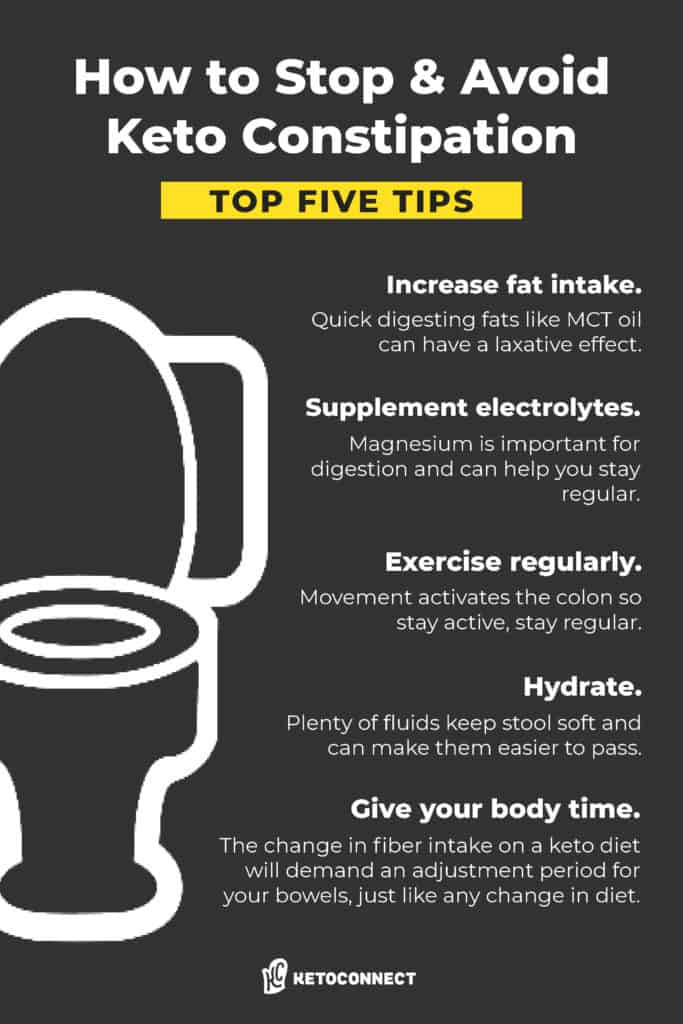
Hydration plays a significant role in maintaining regular bowel movements. Since the keto diet can lead to water and electrolyte loss, it’s important to drink plenty of fluids. Aim for at least 8-10 glasses of water a day. Additionally, consider electrolyte-rich beverages or supplements to ensure you’re getting enough sodium, potassium, and magnesium.
Prioritize Healthy Fats
While on a keto diet, it’s essential to focus on healthy fats. Incorporating sufficient healthy fats can aid digestion by helping your body process other nutrients more easily. Some good sources of healthy fats include:
| Healthy Fats | Description |
|---|---|
| Olive Oil | A great source of monounsaturated fats and antioxidants. |
| Coconut Oil | Provides medium-chain triglycerides (MCTs) that may support digestive health. |
| Fatty Fish | Salmon, mackerel, and sardines are packed with omega-3 fatty acids. |
| Nuts | Almonds, walnuts, and macadamia nuts are high in healthy fats and fiber. |
These fats not only satisfy your hunger but also support your digestive system.
Consider Digestive Supplements
If you’re still struggling with constipation, you might want to consider digestive supplements. Probiotics can be particularly helpful, as they support a healthy gut microbiome. Look for a high-quality probiotic that contains a diverse range of strains to give your digestive health a boost.
Focus on Meal Timing
Sometimes, meal timing can affect digestion. Instead of having three large meals a day, you might find it beneficial to eat smaller, more frequent meals. This approach could help your digestive system process food more efficiently, reducing the likelihood of constipation.
Home Remedies for Keto Diet Constipation
In addition to dietary changes, several home remedies can help alleviate constipation:
Natural Laxatives
Some natural laxatives can promote bowel movements without compromising your keto diet. Some options to consider include:
| Natural Laxatives | Description |
|---|---|
| Psyllium Husk | A soluble fiber that can help ease constipation when taken with water. |
| Magnesium Citrate | This supplement can help draw water into the intestines, promoting a bowel movement. |
| Aloe Vera Juice | Known for its soothing properties, aloe vera can aid digestion. |
Before trying any supplements, it’s best to consult with a healthcare professional, especially if you have pre-existing conditions.
Herbal Teas
Certain herbal teas can also provide relief from constipation. Consider sipping on:
| Herbal Tea | Benefits |
|---|---|
| Peppermint Tea | Can relax the digestive tract and help alleviate discomfort. |
| Ginger Tea | Known for its digestive properties and can help stimulate digestion. |
| Fennel Tea | Has carminative properties that may ease bloating and aid digestion. |
Try incorporating these teas into your daily routine to support your digestive health.
Gentle Exercise
Physical activity is an often-overlooked factor that can help alleviate constipation. Engaging in regular, gentle exercise, like walking or yoga, can encourage bowel movements. Aim for at least 30 minutes of moderate exercise most days of the week. Here are some exercises you might enjoy:
| Exercises | Description |
|---|---|
| Walking | A simple way to get moving and encourage digestion. |
| Yoga | Certain poses can help stimulate the digestive system. |
| Stretching | Even light stretching can promote blood flow and stimulate bowel activity. |
By incorporating exercise into your routine, you may find relief from constipation while enjoying added benefits for your overall health.

When to Seek Help
While many cases of keto diet constipation can be managed with dietary changes and home remedies, there are instances when seeking professional help is necessary. If you experience:
- Severe abdominal pain
- Blood in your stool
- Persistent constipation for more than a week
- Symptoms of dehydration (dizziness, dry mouth, or decreased urination)
It’s important to contact a health care provider immediately. They can provide appropriate guidance and recommendations tailored to your situation.

Conclusion: Embracing Your Keto Journey
Constipation is a common challenge you might face when transitioning to the keto diet, but with the right strategies and remedies, you can overcome it. By increasing your fiber intake, staying hydrated, focusing on healthy fats, and considering digestive supplements, you can alleviate discomfort and enjoy the benefits of this exciting journey.
Remember to listen to your body and make adjustments as needed. Your health is paramount, and finding the right balance will ensure that you stick to your keto lifestyle with ease. Here’s to your health and a happy, thriving keto journey!

Final Thoughts
Transitioning to a keto diet can come with its challenges, but don’t let constipation get you down. By taking proactive steps and utilizing the tips and remedies provided, you can maintain a healthy digestive system while reaping the benefits of your new lifestyle. Embrace the journey, and remember that you’re not alone in this!





